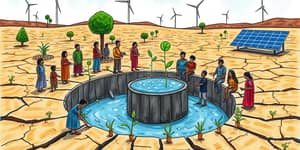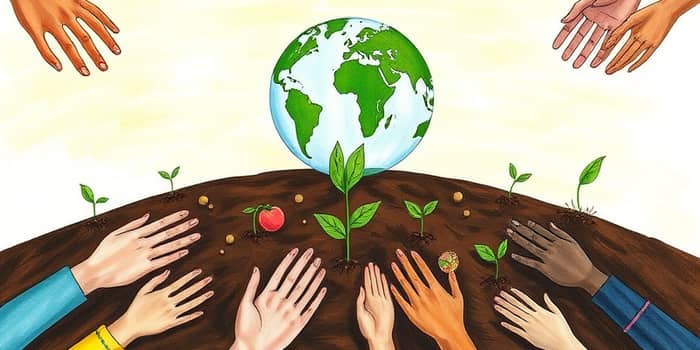
Every day, millions wake to uncertainty over their next meal. As the world grapples with growing crises, the fight against hunger emerges as both a moral imperative and a cornerstone of lasting peace.
In 2024, between 638 and 720 million people faced hunger worldwide, representing up to 8.8 percent of the global population. More than 295 million endured acute hunger for the sixth consecutive year. Despite producing enough food to nourish all 8.2 billion people on earth, one in eleven goes to bed hungry.
Low- and middle-income countries saw an estimated 604.2 million food-insecure individuals in 2025, or 13.5 percent of their populations. Conflict-driven emergencies pushed 1.2 million people to the brink of starvation, while confirmed famines in Sudan and Gaza cast a stark silhouette over our collective conscience.
Hunger seldom arises from a single cause. It is the confluence of violence, market shocks, and climate extremes that tip vulnerable communities into crisis. Understanding these drivers is essential for forging lasting solutions.
Sub-Saharan Africa remains the epicenter of hunger, with 332.3 million people—26.9 percent of the population—facing food insecurity in 2025. Six territories confront the most severe crises, including Gaza (100 percent crisis-level insecurity), South Sudan (57 percent), and Yemen (52 percent).
Asia, by contrast, shows glimmers of improvement. A projected fall from 15.4 percent to 8.1 percent food insecurity in 2025 correlates with economic growth and stable rice prices. Yet progress in one region cannot overshadow suffering elsewhere.
Across 24 countries, over 13 have more than one million children aged 6–59 months who suffer acute malnutrition. Nigeria, DRC, and Afghanistan bear the largest burdens. Shortfalls in nutrition funding mean 2.3 million children may go untreated, risking an additional 369,000 preventable deaths annually.
Addressing child malnutrition requires integrated, multi-sectoral response strategies linking health, education, and agricultural support.
Humanitarian aid for food security could decline by up to 45 percent in 2025, while official development assistance is set to drop by 17 percent. The World Food Programme anticipates feeding 16.7 million fewer people this year—a reduction that may cost lives.
Nutrition programs have secured only 27 percent of their required budgets, leaving vulnerable communities exposed. Bridging this gap demands urgent international cooperation and innovative financing mechanisms.
Confronting global hunger calls for sustainable, inclusive, and resilient systems that withstand shocks and nurture local capacities. Here are four pivotal actions:
Successful examples include community-led grain banks in West Africa and price stabilization policies in Asia that have mitigated the impact of price spikes on vulnerable populations.
The UN Pact for the Future, adopted in September 2024, calls for bold action to build food systems that can withstand conflict, climate change, and economic volatility. Achieving Sustainable Development Goal 2.1—zero hunger by 2030—requires stronger policy coordination, cross-sectoral collaboration, and ongoing institutional innovation.
Technological advances, from drought-resistant crops to digital marketplaces, offer new tools to connect producers with consumers. Yet technology alone is not enough; it must be paired with social safety nets, inclusive governance, and robust data systems to monitor progress in real time.
As individuals, we can support fair-trade markets, reduce household food waste, and advocate for policies that uplift the most vulnerable. Collectively, we can demand transparency in supply chains and greater accountability from governments and corporations.
Ultimately, the path to a hunger-free world is not solely paved by grand summits or emergency relief. It is forged through daily acts of solidarity, equitable investment in communities, and unwavering commitment to human dignity. By embracing innovative technological solutions and partnerships, we can turn the tide against hunger and build a future where every person has reliable access to nutritious food.
References