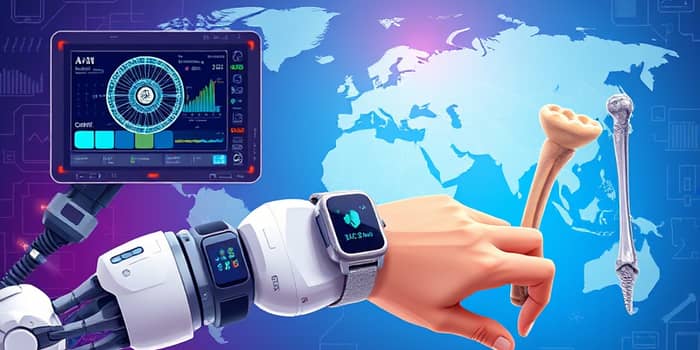
In an era defined by rapid technological advances, the healthcare sector is experiencing unprecedented growth and transformation. The global medical device market alone is projected to soar from $678.88 billion in 2025 to $886.80 billion by 2032, expanding at a compound annual growth rate (CAGR) of 6%. Across diagnostics, therapeutics, and digital platforms, stakeholders are navigating both remarkable opportunities and persistent challenges.
The worldwide medical equipment market’s value escalates from $542.21 billion in 2024 to an anticipated $886.80 billion by 2032. Meanwhile, the broader medical device technologies sector is set to grow from $739.6 billion in 2023 to $1.3 trillion by 2029, boasting a CAGR of 9.8%.
In the United States, market size is expected to reach $955.49 billion by 2030, driven by sustained investment in research and innovation. The U.S. currently contributes over 40% of global medical device revenues, reflecting a blend of advanced manufacturing and a favorable regulatory climate.
At the heart of this growth lies a wave of technological breakthroughs reshaping patient care and operational efficiency.
Artificial Intelligence Integration is revolutionizing diagnostics and treatment planning. Over 80% of health executives predict a significant or moderate impact from generative AI by 2025. AI-driven tools are already outperforming experienced clinicians in tasks such as early skin cancer detection, with potential to reduce treatment costs by up to 50% and improve health outcomes by 40%.
Robotic Surgery platforms continue to advance, enabling minimally invasive procedures with unrivaled precision. Milestones like the UAE’s first robotic mastectomy at Cleveland Clinic Abu Dhabi highlight the potential for faster recovery times and smaller incisions.
Meanwhile, 3D Printing and Additive Manufacturing are ushering in an era of patient-specific implants and prosthetics, cutting waste and accelerating the transition from prototype to production.
The rise of telemedicine and integrated digital platforms is removing geographic barriers to care. Home-based digital therapeutics and wearable biometric devices are empowering patients to manage chronic conditions remotely, from cardiac monitoring to diabetes management.
Despite breakthroughs, the world faces stark healthcare disparities. More than half the global population—about 4.5 billion people—lack full coverage of essential health services.
Annual healthcare costs are rising by over 10% worldwide, with Asia-Pacific seeing growth of 12.3% and the Middle East and Africa at 12.1%. Yet, roughly $1.8 trillion spent on global health initiatives yields minimal improvement in outcomes, underscoring the need for targeted investment.
Venture capital in U.S. healthcare saw only about $3 billion raised in H1 2025, the lowest in over a decade. Meanwhile, private markets show tentative recovery, and China’s biopharma licensing deals are increasing.
Regulatory bodies are working to balance innovation with safety. The FDA’s forthcoming guidelines on AI lifecycle management aim to ensure both efficacy and patient protection. Enhanced regulatory alignment efforts across regions will be critical to accelerating approval pathways.
As we look to 2025 and beyond, health system leaders are focusing on:
To navigate this dynamic landscape, organizations should adopt a multifaceted approach:
By championing collaborative investment strategies and prioritizing equity, the healthcare industry can ensure that innovations reach those who need them most.
The convergence of AI, robotics, digital health, and precision medicine signals a new frontier in healthcare delivery. While growth projections are impressive, true success will be measured by our ability to bridge persisting disparities and deliver value-based care at scale.
Stakeholders must remain agile, balancing rigorous regulatory standards with bold innovation. Through informed investment, global partnerships, and steadfast commitment to patient outcomes, we can transform healthcare into a more equitable, efficient, and compassionate system for all.
References