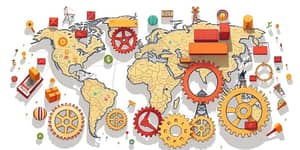
As we stand at a pivotal juncture in history, the global economic landscape is undergoing a profound transformation. The emerging markets of Asia, Latin America, and Africa are ascending as engines of growth, challenging the long-standing dominance of Western economies. This movement, often called the Great Rebalancing, reflects a world in which prosperity, innovation, and opportunity are more evenly distributed than ever before.
Understanding this phenomenon is not only crucial for policymakers and investors but also for every individual seeking to navigate the new currents of globalization and technological change. In this article, we explore the historical roots, present imbalances, and future pathways that define the Great Rebalancing. We will offer practical insights and policy solutions to ensure a smoother transition for all stakeholders.
The Great Rebalancing refers to a fundamental long-term economic restructuring where economic growth shifts from developed Western nations to emerging markets. By 2050, traditional Western economies may hold a smaller share of global GDP than they did centuries ago. This shift corrects mathematical imbalances in global trade, bringing production, consumption, and capital flows into better alignment.
At its core, rebalancing addresses disparities created by policies that encouraged overconsumption in the West and excess savings in the East. Emerging markets must absorb their domestic savings through investment and consumption, while developed economies must moderate their reliance on debt and credit expansion. Achieving equilibrium requires coordinated efforts across fiscal, monetary, and development policies.
In 1945, the United States emerged from World War II as the undisputed economic hegemon. With intact manufacturing capacity and vast financial resources, the US designed the post-war international system around the dollar and institutions like the IMF and World Bank. This framework underpinned global stability and fostered a credit-driven, consumer-oriented economy.
The US consumer, representing only 4% of the global population, accounts for nearly 30% of global consumption. This deepest and most liquid capital markets mechanism provided exporters with a reliable market and funded US investments, reinforcing a virtuous cycle of growth. The American military guarantee supported geopolitical order, allowing trade and capital to flow freely under a rules-based framework.
Today, the three major economic blocs exhibit contrasting imbalances that drive the need for rebalancing:
Key statistics highlight these dynamics: China’s consumption-to-GDP ratio is around 56%, far below India’s 71% and the global average of 76%. The US consistently runs large current account deficits, while China and the Eurozone post surpluses. Without adjustment, these imbalances risk triggering financial crises and social instability.
Two powerful forces are reshaping the global economy: globalization paired with technology and demographic shifts in emerging markets. Global supply chains and digital platforms have accelerated trade, capital flows, and knowledge transfer. Cross-border capital now equals 15% of world GDP, compared to just 3% a century ago.
Meanwhile, emerging markets are experiencing simultaneous labor force growth and rapidly declining birthrates. This unprecedented urban migration rates worldwide are moving millions from rural to urban areas, boosting productivity and incomes. By 2030, more than 40% of the world’s population will be middle class, up from less than 20% today.
The Great Rebalancing demands collaborative strategies. The proposed Four-Part G3 Accord outlines a comprehensive approach:
Governments must also manage the legacy of the 2008–2009 crisis, which exposed the fragility of interconnected financial networks. A balanced rotation of demand from surplus to deficit economies and a disciplined reduction of debt in developed nations are critical. The G-20’s fiscal stimulus efforts buy time, but long-term stability hinges on genuine structural reforms.
For businesses and investors, the Great Rebalancing signals a shift in opportunity. No longer can global enterprises treat emerging markets as peripheral. Success will require local partnerships, cultural understanding, and tailored strategies to serve millions of newly affluent consumers. Companies that win in Shanghai, Mumbai, and São Paulo first will gain a competitive edge worldwide.
Policymakers must recognize that a multipolar economy demands shared leadership. The era of a single hegemon underwriting global order has passed. Instead, the future depends on a network of cooperative relationships where China, Europe, and the United States jointly steward prosperity, security, and sustainable development.
The Great Rebalancing offers both promise and peril. If nations adapt, they can unlock trillions of dollars in economic growth, lift hundreds of millions out of poverty, and foster a more resilient world order. But failure to address imbalances risks financial turmoil, political fragmentation, and lost opportunities.
Individuals, businesses, and governments must embrace flexibility, innovation, and partnership. By investing in education, infrastructure, and inclusive institutions, we can ensure the benefits of rebalancing reach every corner of the globe. The time to act is now: together, we can shape a future where opportunity and prosperity are truly shared.
References